
Immersive Interiors by Award-Winning Adean Studios
Project Spotlight: Cafe Goldie, Boqueria Atlanta and Daisy Margarita Bar
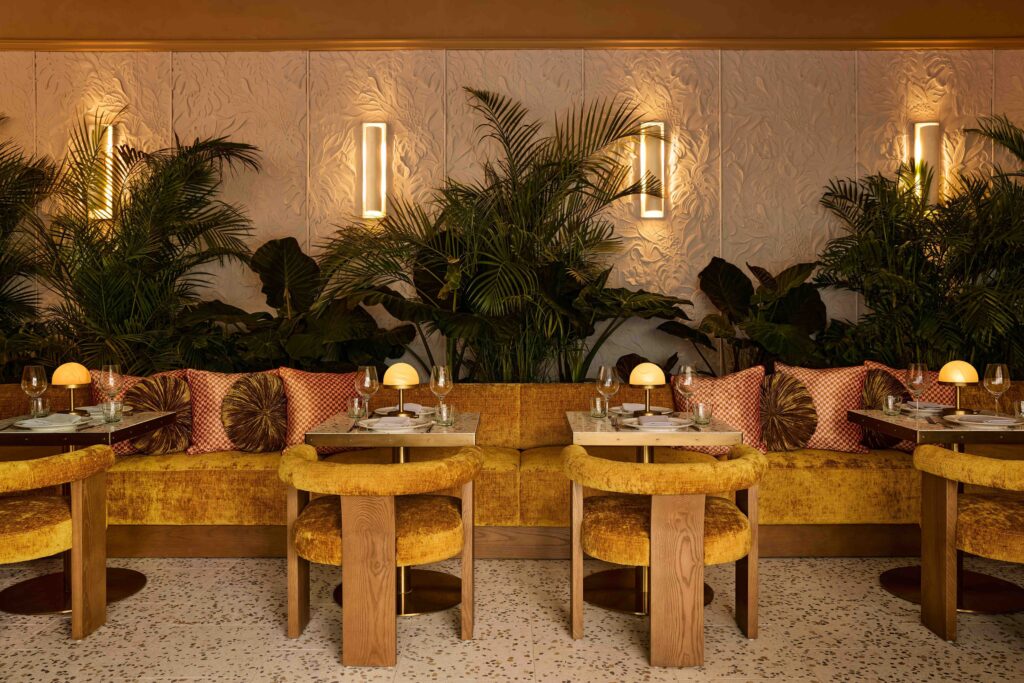
(Design: Adean Studios, Photo: MJ Kroeger)
Adean Studios, based in San Francisco, has been recognized at the INT Interior Design Awards, with Boqueria Atlanta and Cafe Goldie winning in the Commercial Interior category, and Daisy Margarita Bar shortlisted. Led by Alexa Nafisi-Movaghar, the studio creates immersive hospitality spaces rooted in storytelling, materiality, and operational flow. From a Spanish-inspired tapas bar to a Hollywood-glam café and a layered Mexican cantina, each project reflects a distinct narrative while maintaining a strong design identity.
In this interview, Alexa Nafisi-Movaghar shares insights into her creative journey, the concepts behind these projects, and the philosophy shaping Adean Studios’ work.
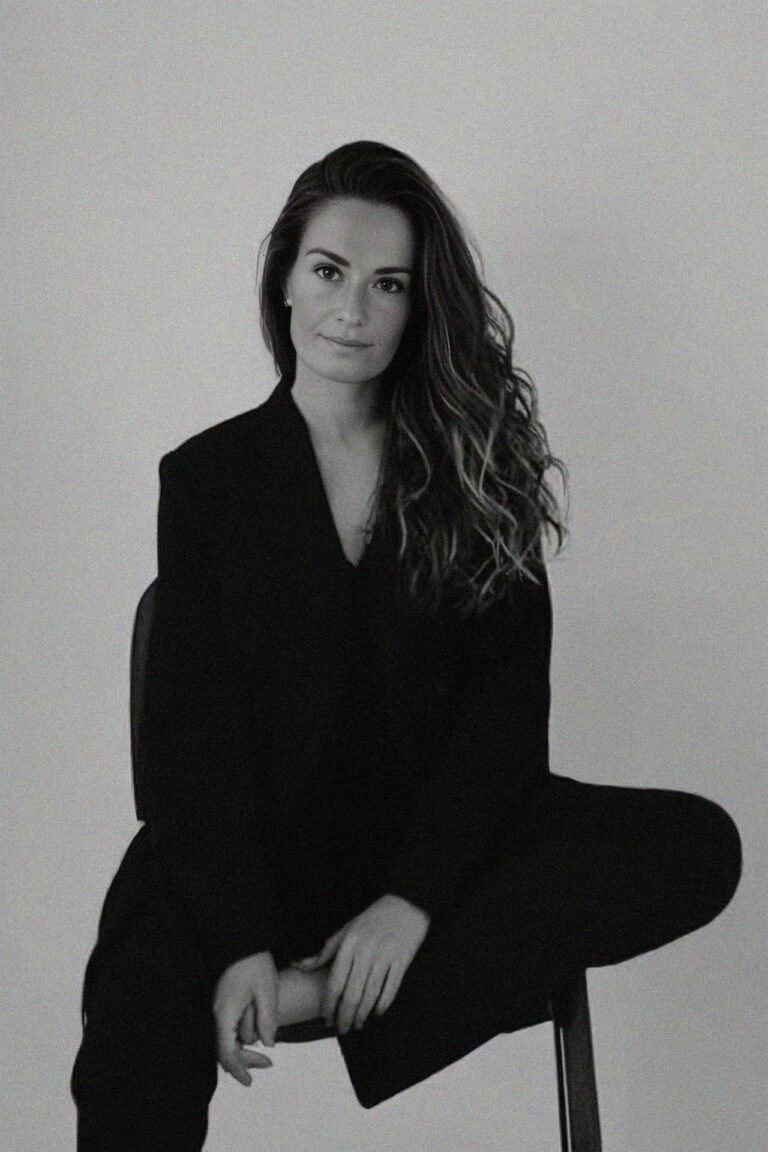
Interview with Alexa Nafisi-Movaghar - Adean Studios
1. Can you share the story of how you entered interior design, and how your background shaped your creative practice?
I grew up in Park City, Utah, in a town where hospitality is not an abstract idea, it is everyday life. From middle school through high school I worked in hotels and restaurants, so my first exposure to design was actually the back of house. I watched how servers moved, how hosts greeted guests, how circulation either supported a great service or made everything harder. That rhythm is still in my head every time I design. If a space does not work for the staff, it will never truly work for the guest.
I entered the field through architecture, starting as an intern at Otto Walker Architects in Park City. That experience grounded me in proportion, structure, and the discipline of drawing by hand before anything touched a computer. Sketching is still my fastest way of thinking, whether I am in a client meeting working through a concept or on site with a contractor resolving a detail in real time.
While studying Interior Design at the Academy of Art in San Francisco, I worked with Studio Volpe and deepened my appreciation for craft, materiality, and the emotional weight of well made objects. From there, I moved into hospitality full time with AvroKO, managing projects that spanned the United States, Mexico, and the Middle East. Working at that scale taught me how narrative, context, and operations all have to be woven together if you want a hotel or restaurant to feel both transportive and truly functional.
After relocating to New York, I joined Soho House and focused on revitalizing existing Houses and designing new properties across North America. That period sharpened my sense of brand continuity and guest experience. I became obsessed with the idea that you can walk into a space and immediately feel that it belongs to a larger story, yet it still feels rooted in its specific city and culture.
In 2019, I founded Adean Studios out of my West Village apartment with a simple ambition: to create hospitality spaces the world has not quite seen yet, but that somehow feel instantly familiar and welcoming. Today, from our base in San Francisco, my practice is an extension of that full arc. I grew up inside hospitality operations, trained in architecture and interiors, and worked globally with narrative driven brands. At Adean, we design from the big moves to the tiniest details: structural interventions, custom lighting and furnishings, all the way to plateware and salt and pepper shakers. Every decision supports a cohesive story and a smooth operational flow.
All of this has shaped a creative practice that is equal parts romantic and pragmatic. The work is deeply narrative, highly customized, and relentlessly attuned to how people actually move through and use a space. My background in hospitality operations, architecture, and international hotel and restaurant design means that every project is treated not just as a beautiful interior, but as a living, working environment that has to perform night after night, service after service, while still feeling fresh, memorable, and a little bit surprising.
2. What was the brief for your winning project, and how did it inspire your approach?
Each of these winning projects started with a very specific emotional brief, which is my favorite way to design.
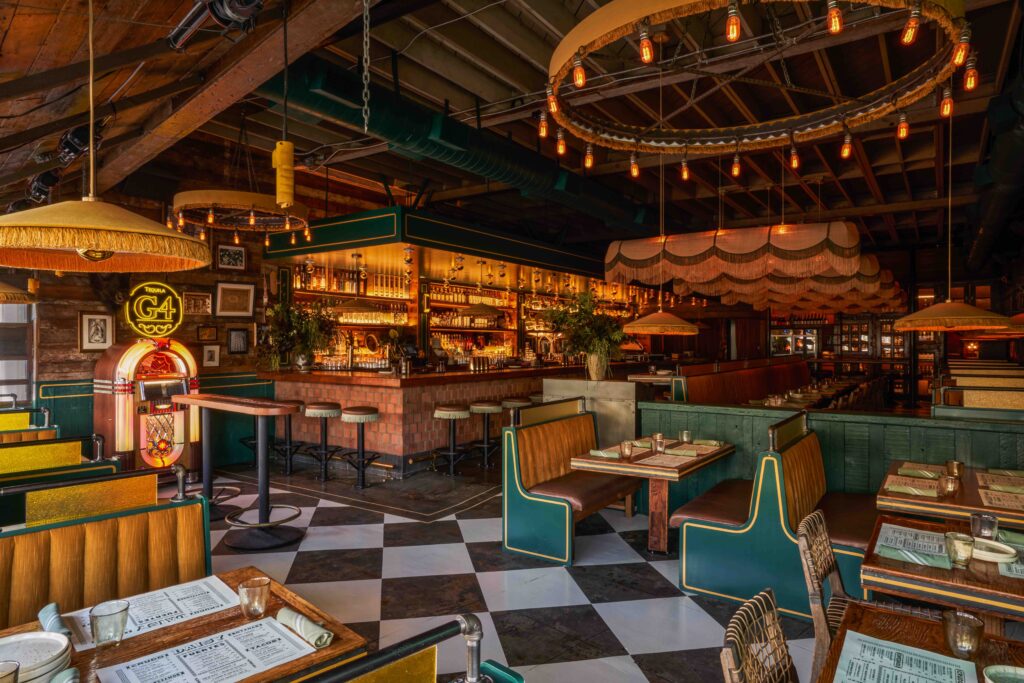
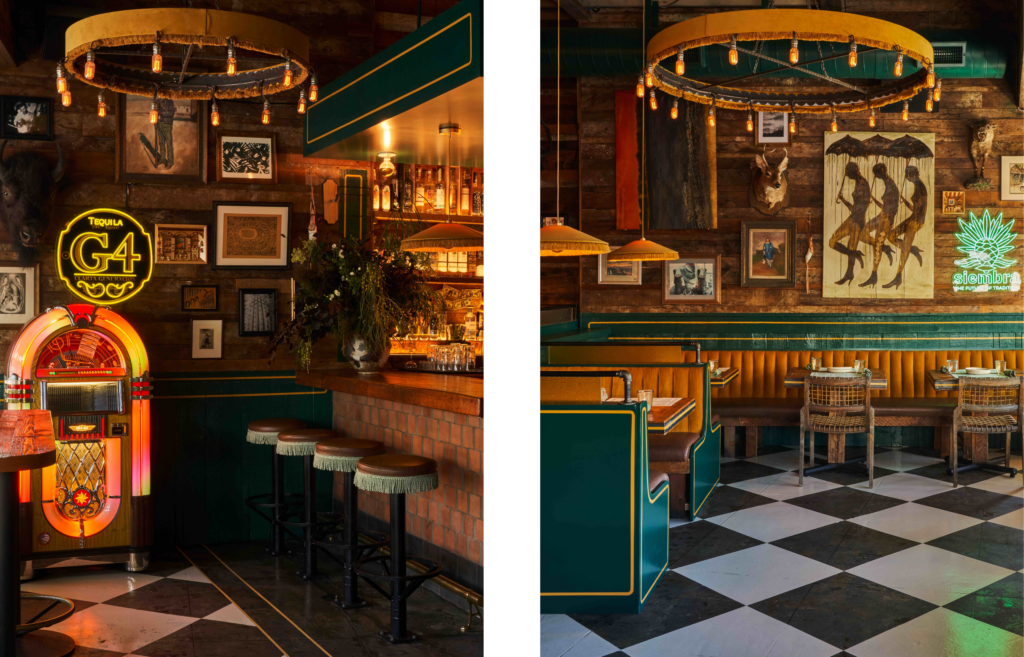
For Daisy Margarita Bar in Sherman Oaks, the ask was to turn a one hundred seat space on Ventura Boulevard into an elevated Mexican cantina that still felt a little wild and unpolished in the best way. The client wanted a Norteño, vaquero spirit rather than a theme bar. We were working with the bones of an existing restaurant, so the brief pushed us to upcycle as much as possible and then build a new story on top. That led to a mix of rich greens and yellows, layered textures, fringe, leather, portraits, taxidermy, neon, and a custom jukebox. The whole space walks a line between rustic tavern and glam neighborhood dive, which is exactly where the brief wanted us to land.
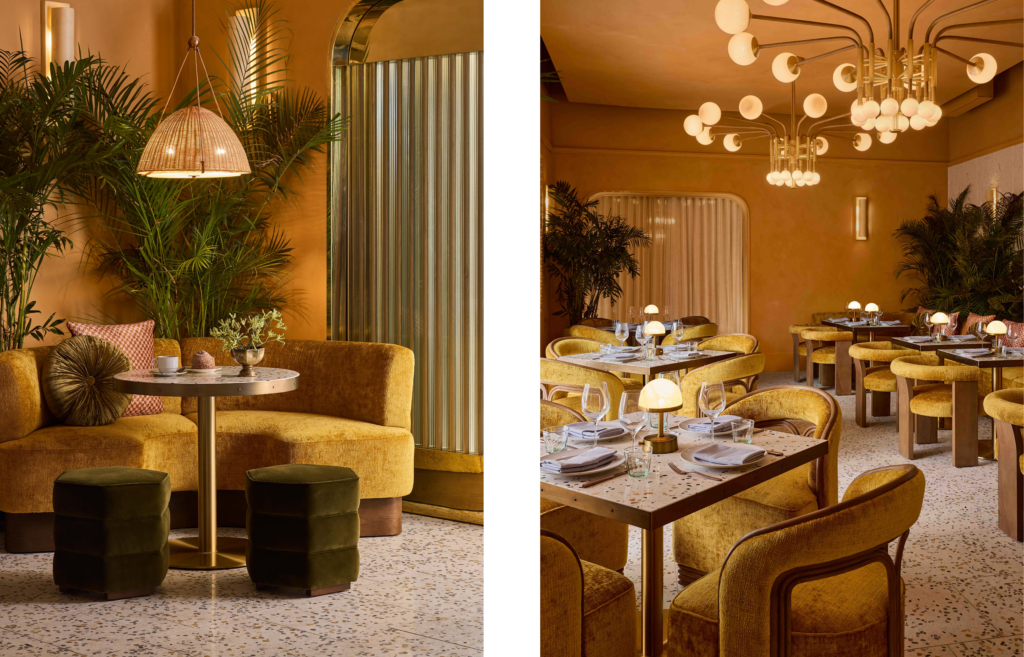
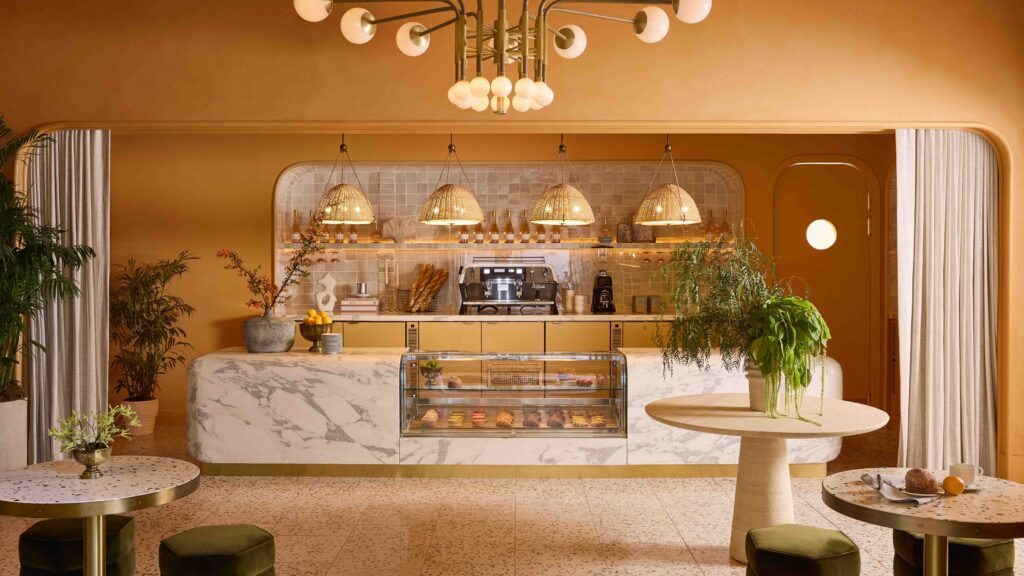
Café Goldie at the W Hollywood came with a completely different energy. This was technically the lobby café and breakfast room, but the client wanted it to feel like a small, glowing jewel box that could carry guests from morning coffee to late night drinks. The conceptual starting points were the golden hour in the Hollywood Hills, old Hollywood glamour, and a relaxed California indoor outdoor lifestyle. That inspired a moody palette of warm neutrals and golds, mid century inspired pieces softened with feminine curves, backlit elements that glow rather than glare, and custom touches like the marble counter and saturated mustard velvet chairs. Because the space has to flex from breakfast to cocktails, we treated light, color, and detailing almost like a dimmer switch for mood, so it always feels a bit cinematic and slightly flirtatious.
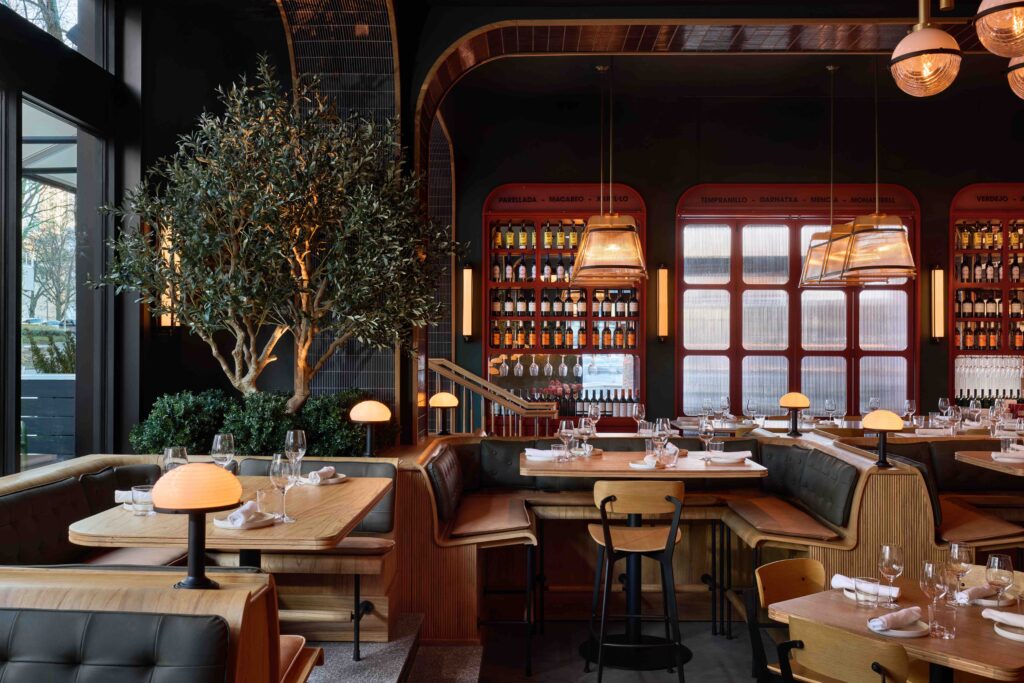
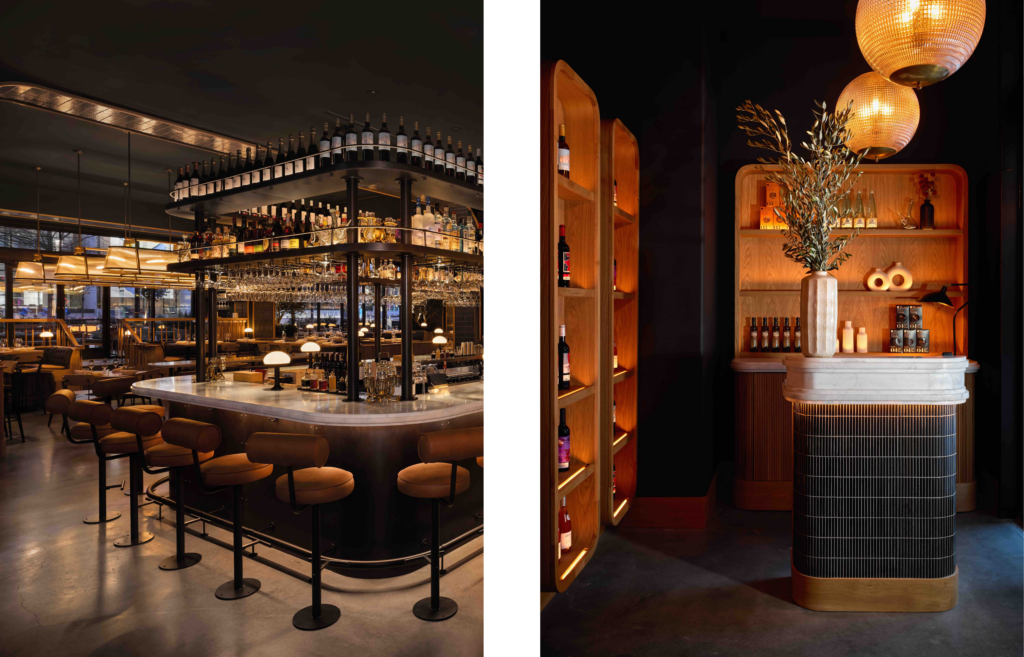
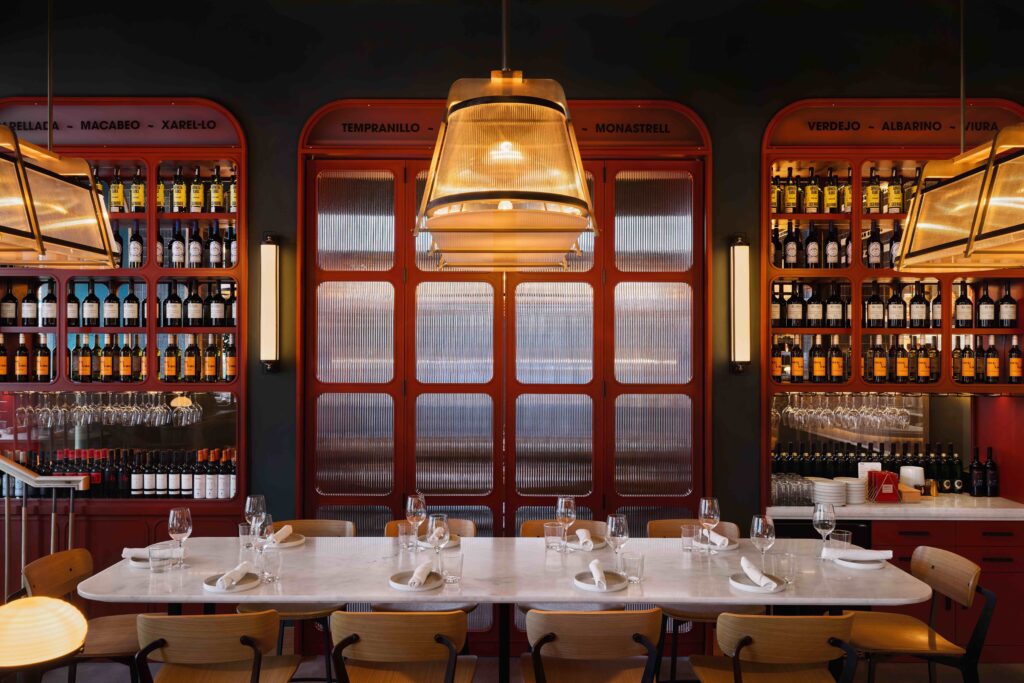
For Boqueria Atlanta, the brief was to introduce the brand to Colony Square with a space that felt undeniably Boqueria, but also tailored to Atlanta and this specific site. The client wanted an energetic tapas bar that nodded to historic Spanish markets and 1940s European modernism, with an honest, industrial backbone that would age beautifully over time. That drove our focus on an open kitchen that connects front and back of house, an indoor patio sequence that pulls the plaza inside, robust materials that are meant to patina, and a play between strict geometry and soft curves. Arched metalwork, product displays, greenery, and warm amber light bring in the marketplace references, while the brand’s signature reds and extensive custom furniture and lighting link the restaurant back to the larger Boqueria family.
Across all three projects, the briefs were less about picking a style and more about capturing a very clear mood and cultural reference point. That freedom inspired us to lean hard into narrative, operations, and materiality in different ways for each concept, while still staying true to what we do as a studio: building hospitality worlds that feel specific, transportive, and ready to work hard in daily service.
3. What design choices or innovations in this project are you most proud of, and what challenges did you face while bringing them to life?
One of the things I am most proud of across these projects is how deeply the storytelling is tied to real world operations. At Daisy, we took an existing shell and, instead of erasing it, used it as a framework to build this layered, slightly rowdy cantina world. We upcycled wherever possible, then pushed into bolder moves like the portraits, fringe, leather, and the custom jukebox, all while quietly reorganizing circulation so the staff can move fast and clean during a packed service. At Café Goldie, the innovation is more subtle but just as intentional. We designed the space almost like a piece of stagecraft, with custom millwork, lighting, and a moody palette that allows it to shift from breakfast to cocktail bar without ever feeling like it is doing double duty. Boqueria Atlanta is where we leaned into the open kitchen as the heart of the experience, treating it as both a piece of architecture and a kind of social engine. The indoor patio sequence, custom furniture and lighting, and robust materials that are meant to patina are all working together to create a space that feels energetic and lived in from day one.
The challenges were very real on each project. At Daisy we were threading the needle between budget, reuse, and a very specific aesthetic, all within the constraints of an inherited floor plan and structure. At Café Goldie, the biggest challenge was layering all of the technical and operational requirements of a hotel food and beverage space into a relatively small footprint without losing that jewel box feeling. We had to coordinate closely with the hotel team, kitchen consultants, and building systems to keep the space visually calm but incredibly hardworking behind the scenes. Boqueria Atlanta brought the scale and complexity of a major hospitality build, from acoustics and lighting to sight lines and the relationship between the dining room and the plaza. In every case, the design choices I am proudest of are the ones that look effortless to the guest, but took months of coordination, drawing, and iteration with architects, consultants, and contractors to pull off.
In terms of recognition, I see these honors as more than just a moment of celebration. They are a tool to clarify and amplify what our studio stands for. Awards and press help us tell a more focused story to future clients: that we are a hospitality studio that will obsess over both the poetry and the plumbing, the narrative and the night by night operations. They validate our commitment to custom furniture and lighting, to thoughtful material choices, and to building worlds that feel specific rather than generic.
Moving forward, I plan to leverage this recognition in a few ways. First, as a way to attract partners and clients who are excited about this level of detail and narrative depth, whether they are hotel groups, restaurateurs, or collaborators in adjacent fields. Second, as internal fuel for the studio, giving my team the confidence and visibility to keep pushing for more inventive, tailored solutions rather than default ones. And third, as a platform to keep evolving our brand and ethos: investing more in sustainable material research, in prototyping custom pieces, and in sharing more of the process behind our work. The goal is that each project builds on the last, and that this recognition helps open doors to even more ambitious, story rich hospitality projects where we can keep refining what Adean Studios does best.
4. Who are the interior designers or creative figures who inspire you most, and why?
The people who inspire me most are designers who build worlds, not just rooms. Julia Morgan is a big one for me. I love the way she balances strength and grace, and how her work is always deeply rooted in place. There is a quiet rigor to her buildings, but also a generosity. Spaces feel robust and enduring, yet intimate and human. Carlo Scarpa is another constant reference. His obsession with detail, the way he choreographs a stair, a threshold, or a material joint, reminds me that every tiny decision can carry meaning. He makes you slow down, notice, and feel the weight of craftsmanship.
In hospitality, I often look to Martin Brudnizki and Roman and Williams. Both are masters at creating immersive environments that feel instantly alive. Martin’s work is incredibly social and atmospheric. He is not afraid of color, pattern, or glamour, but there is always a logic to the way the space supports the rituals of dining and gathering. Roman and Williams have this ability to make a new space feel like it has always existed, with layered materials, patina, and an almost cinematic sense of storytelling. What ties all of these influences together for me is their commitment to narrative, craft, and longevity. They create spaces that are meant to be lived in, not just photographed once.
Receiving this accolade has not changed what I value, but it has sharpened my focus and given me permission to lean even more into those values. It reinforces the idea that there is real room in the market for hospitality design that takes narrative, operations, and craft equally seriously. It encourages me to keep pushing for custom solutions, to keep collaborating closely with fabricators and consultants, and to protect the time needed to get the details right. It has also been a reminder that the work resonates most when it is specific and honest to the story of that particular place and client, rather than chasing trends.
For aspiring designers considering the INT journey, my advice would be: build your foundation, then trust your point of view. Spend time learning how buildings and businesses actually work. If you love hospitality, work in a restaurant or a hotel. Watch the flow of service, understand what the staff needs, and let that inform your design decisions. Study the people who inspire you, but do not try to imitate them. Use their work as a way to ask better questions about your own. When it comes to awards, do not design for the accolade. Design for the guest, the staff, and the long term life of the space. Document your process, submit work you truly believe in, and see the INT journey as one more way to clarify who you are as a designer, rather than a verdict on your value.
5. How would you describe your design philosophy and the principles that guide your decisions?
I would describe my design philosophy as equal parts romantic and pragmatic. I am always chasing a very specific feeling for the guest, but I am just as focused on how the staff will move, work, and live in the space every day. For me, a project is successful when the narrative, the operations, and the architecture are all in dialogue, the story is clear, the floor plan is smart, and every material choice feels inevitable rather than decorative.
Context is a huge driver. I start with the place, the client, and the brand, and I am always trying to create something that could only exist there. I am drawn to spaces that feel layered and lived in rather than overly polished, with a mix of custom elements, craft, and honest materials that will age gracefully. I care deeply about proportion, circulation, and sight lines, but also about textures, light levels, and the tiny details a guest’s hand actually touches: a banquette edge, a brass rail, a saucer under a coffee cup.
Collaboration is another core principle. I design with the entire team in mind – clients, chefs, operators, architects, fabricators, and contractors, because hospitality is a team sport. The best ideas often come out of rigorous coordination and a willingness to iterate. I try to protect the integrity of the concept while being flexible about how we get there.
Above all, I am guided by longevity and authenticity. I am not interested in chasing trends or one-photo moments. I want the spaces we design to still feel grounded, generous, and relevant years from now, evolving with the business and the people who use them, while staying true to the original story that brought them to life.
6. How do you balance timeless design with contemporary trends, and how do you approach sustainability in your work?
I think of “timeless” less as a visual style and more as a feeling of longevity and ease. When I am designing, I am not asking “Is this trendy?” so much as “Will this still feel grounded and appropriate ten years from now?” I tend to anchor projects in strong bones: clear circulation, good proportions, robust materials, and a palette that feels connected to the architecture and the place. Then I layer in more contemporary moves through lighting, art, color, and detailing that can evolve over time without breaking the core of the space.
I do pay attention to what is happening in design and culture, but trends are more like a temperature check than a directive. If a “trend” aligns with the story we are telling and genuinely serves the operations and guest experience, I will use it. If it feels forced or like it will age badly, it does not make it into the final design. I would rather build in grace and patina than chase a moment.
Sustainability, for me, starts with designing for long life and hard use. In hospitality, the most sustainable choice is often a layout and material palette that will not need to be ripped out in five years. That means prioritizing durable finishes, thoughtful detailing, and flexibility so spaces can shift with the business instead of being completely re-done. Wherever possible, we look for ways to reuse existing shells, upcycle elements, work with local fabricators, and specify materials that are responsibly sourced and low in VOCs.
I also try to think in terms of total lifecycle, not just the install date. How easy is this to maintain? Can it be repaired instead of replaced? Are we choosing LED and efficient lighting, not just for code but for long-term energy use and comfort? All of those decisions might not be obvious to the guest, but they quietly shape how the space ages.
Ultimately, balancing timelessness, contemporaneity, and sustainability comes down to discipline. Staying committed to the core story and the long view, and being selective about where we “turn up the volume” with more current gestures, allows the work to feel of-the-moment without being disposable.
I see the relationship between a clients needs and my creative voice as a conversation, not a tug of war. My first job is to listen deeply: to understand the business model, operational needs, brand story, budget, and the very real constraints of timeline and site. I want to know what success looks like for them: more covers, a different type of guest, a new daypart, a repositioned brand. All of that becomes the framework I design within.
Once that foundation is clear, my role is to translate those needs into a spatial narrative the client might not have imagined yet. That is where my voice comes in. I am not just executing a mood board, I am shaping the entire world the guest steps into: the plan, the circulation, the lighting, the textures, the way the space feels at 8 a.m. versus 10 p.m. I try to push clients gently but confidently toward solutions that are more specific, more layered, and more operationally thoughtful than the safe version they might arrive at on their own.
Practically, that balance shows up in how we work: lots of dialogue, options that clearly show trade offs, and a willingness to explain why a certain proportion, material, or layout will serve them better in the long run. I will flex on things that are about taste, but I am firm about the core moves that protect the concept and the functionality, the bones of the space. When clients understand that I am protecting their guest experience and their future operations, not just my own ego, the trust builds quickly.
In the end, the best projects feel like a true fusion: the client sees themselves fully reflected in the space, and I can look at it and say, This is our studios work. It feels like their world, told in our language. That is the balance I am always aiming for.
8. What does receiving an INT Interior Design Award mean to you personally and professionally?
Receiving an INT Interior Design Award feels both humbling and energizing for me! On a personal level, it is a moment to pause and acknowledge the long arc of my path in hospitality spaces, from working in hotels and restaurants as a teenager to hand drafting in architecture offices to building my own studio. So much of our work happens quietly, in drawings, coordination calls, and jobsite walk throughs. To have that invisible labor recognized by a jury of peers feels like a real affirmation that the way I see and build spaces has value beyond a single project.
Professionally, this award is meaningful because it validates the very specific lane my studio occupies. We are deeply focused on hospitality, on narrative, on operations, and on custom details that most guests might only feel rather than consciously notice. An INT Interior Design Award tells current and future clients that this level of care is not just nice to have, it is recognized and respected within the design community. It gives us a stronger platform when we advocate for better materials, smarter layouts, or the time needed to get the details right, because there is a track record behind the point of view.
It also means a great deal to me as a studio leader. My team and our collaborators put an enormous amount of thought and effort into every project. This recognition belongs to them as much as it does to me. It boosts morale, builds confidence, and sets a benchmark for the caliber of work we want to keep producing.
Most of all, the award is motivation. It does not change what I value in design, but it sharpens my commitment to those values. It encourages me to keep pushing for hospitality spaces that feel specific, generous, operationally intelligent, and emotionally resonant, and to use the visibility of this recognition to attract clients and partners who are excited to build that kind of work together!
Designing Hospitality That Feels Alive
Recognized by the INT Interior Design Awards, Adean Studios continues to shape hospitality environments that balance narrative, functionality, and atmosphere. Through projects like Boqueria Atlanta, Café Goldie, and Daisy Margarita Bar, the studio demonstrates how thoughtful design can create spaces that are not only visually compelling but also deeply experiential and enduring.
Check out other inspiring projects:
INT Interior Design Awards Winners
Interviews:
Past INT Winners
Adean Studios:
Official Website