
Walkway House: Where Architecture and Interior Design Become One
Project Spotlight: Walkway House
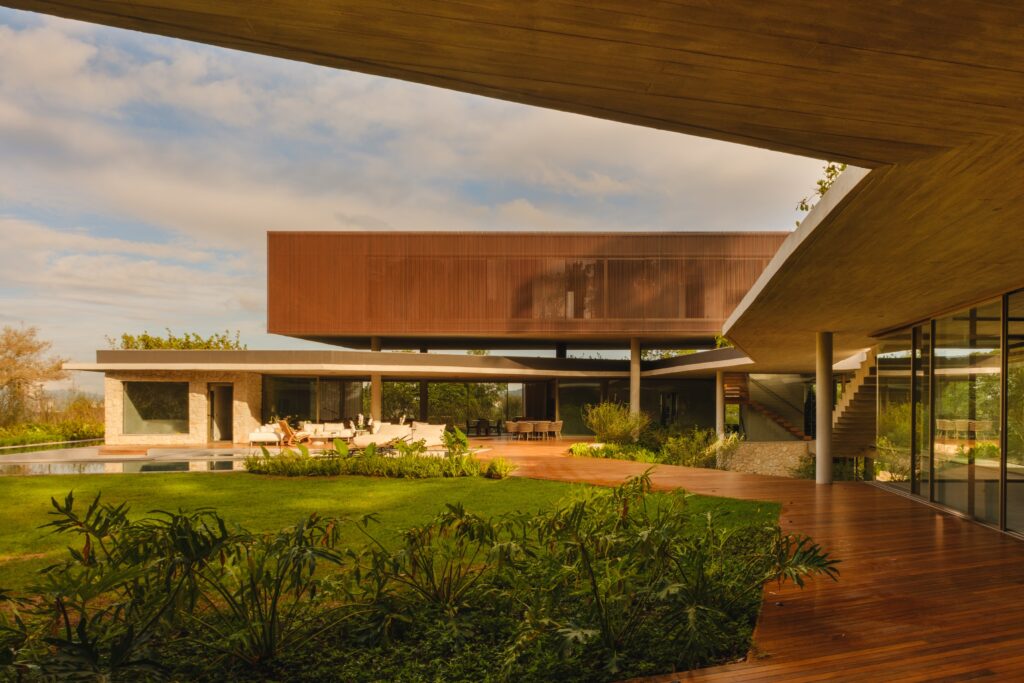
(Design: FGMF, Photography: Victor Lucena)
Located in São Paulo, Brazil, Walkway House by FGMF, blends architecture and interiors to respond to its unique site, a flat lawn beside a steep wooded slope. Winner of the 2025 Residential Interior Design of the Year at the INT Interior Design Awards, the home was designed by lead architects Fernando Forte, Lourenço Gimenes, and Rodrigo M. F., and reflects a deep dialogue between modernist influences and contemporary Brazilian design. Fernando Forte shares the creative process, challenges, and design philosophy behind this award-winning home.
Interview with Fernando Forte - FGMF
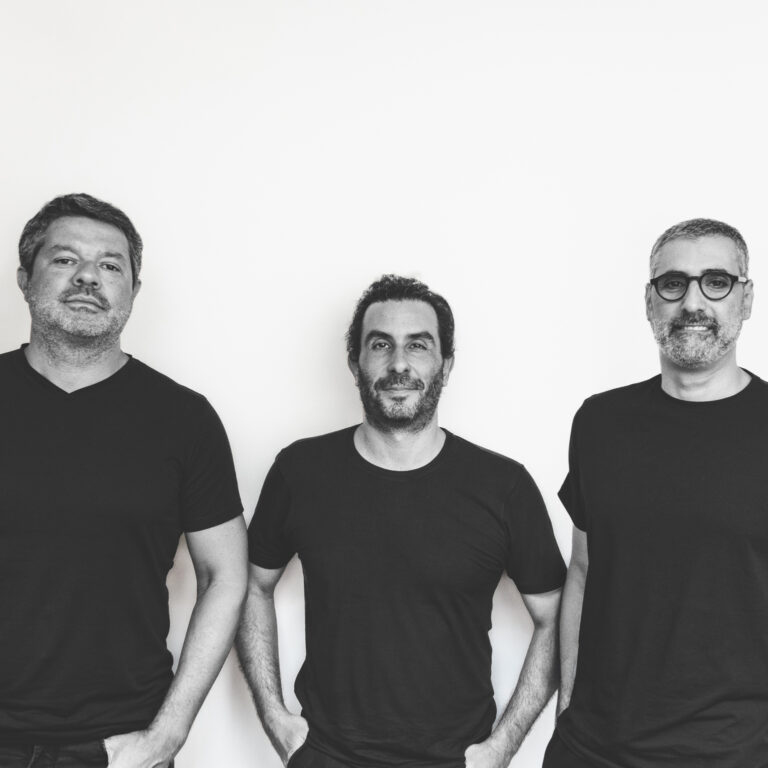
1. Can you share the story of how you entered interior design, and how your background shaped your creative practice?
The three founding partners of FGMF have always been interested in every scale and type of project, and interiors have long been a part of our work, even if somewhat informally at first. After several years of practice, we decided to establish dedicated teams and explore interior design more deeply, with greater quality, range, and focus, always in close dialogue with our architecture.
Our backgrounds are quite diverse, not only because of our distinct personalities but also due to our wide-ranging interests in art, cinema, lifestyle, nightlife, comics, literature, and travel. These influences continuously shape FGMF’s creations in multiple, sometimes even contradictory ways, which we find both exciting and creatively challenging.
2. What was the brief for Walkway House, and how did it inspire your approach?
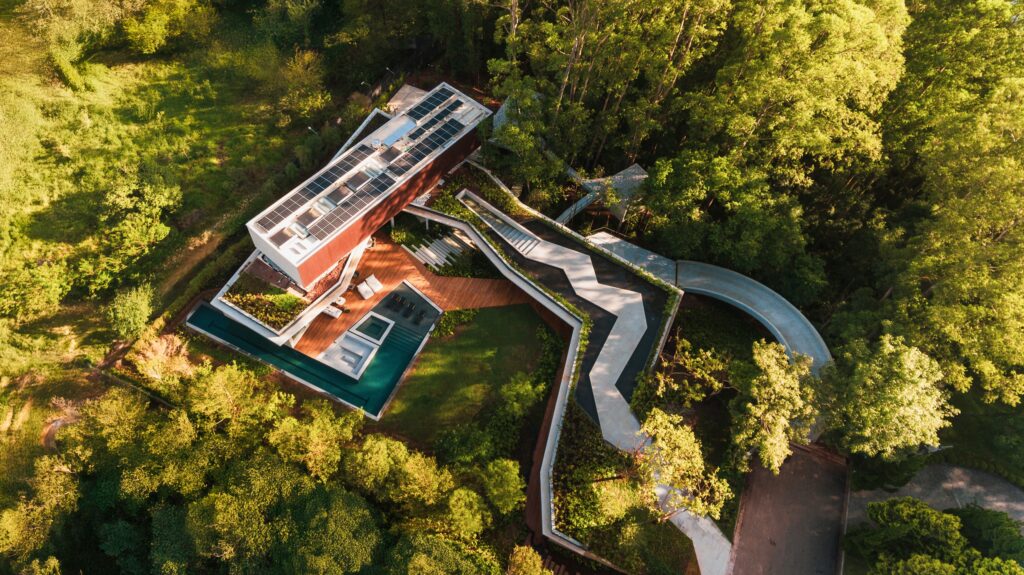
Walkway House is a project very dear to us, one that evolved over many years and through many transformations. The clients, like us, saw the uniqueness of their site as the starting point for a home that would embrace its dual nature: one part flat, sunny, and grassy, and another steep, shaded, and densely wooded.
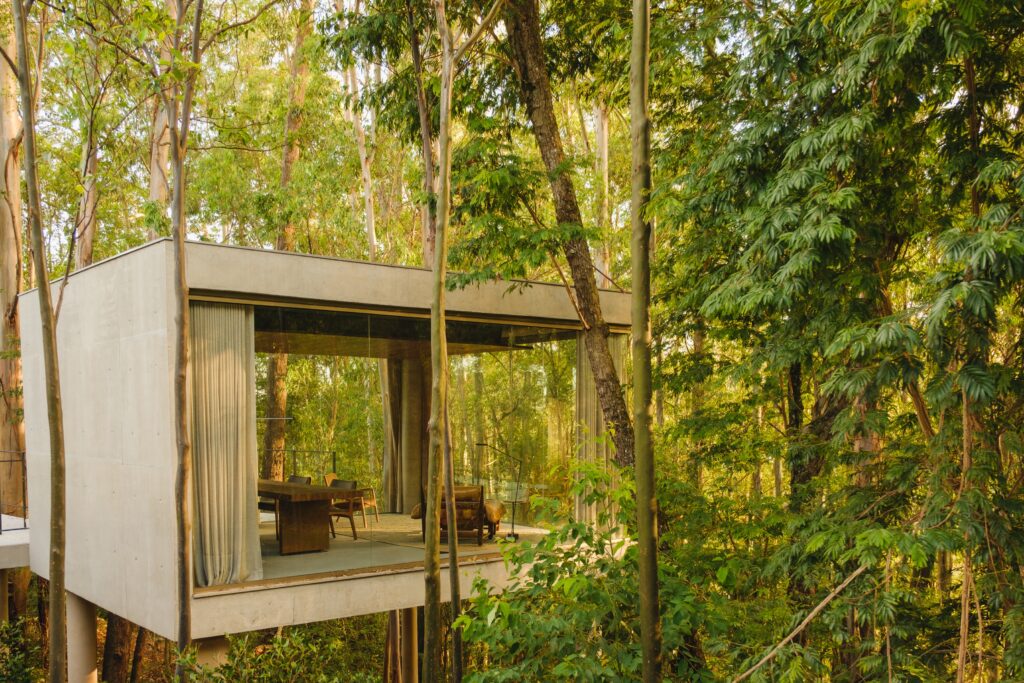
The house sits precisely at the threshold between these two landscapes, inviting residents to experience both. On one side, there is a view of large trees and layered shadows; on the other, a bright internal courtyard sheltered from the street by the terrain. Some areas, such as the gym and home office, are immersed in the forest, offering a sense of seclusion, while others, like the living room, open fully to the pool and sunny patio.
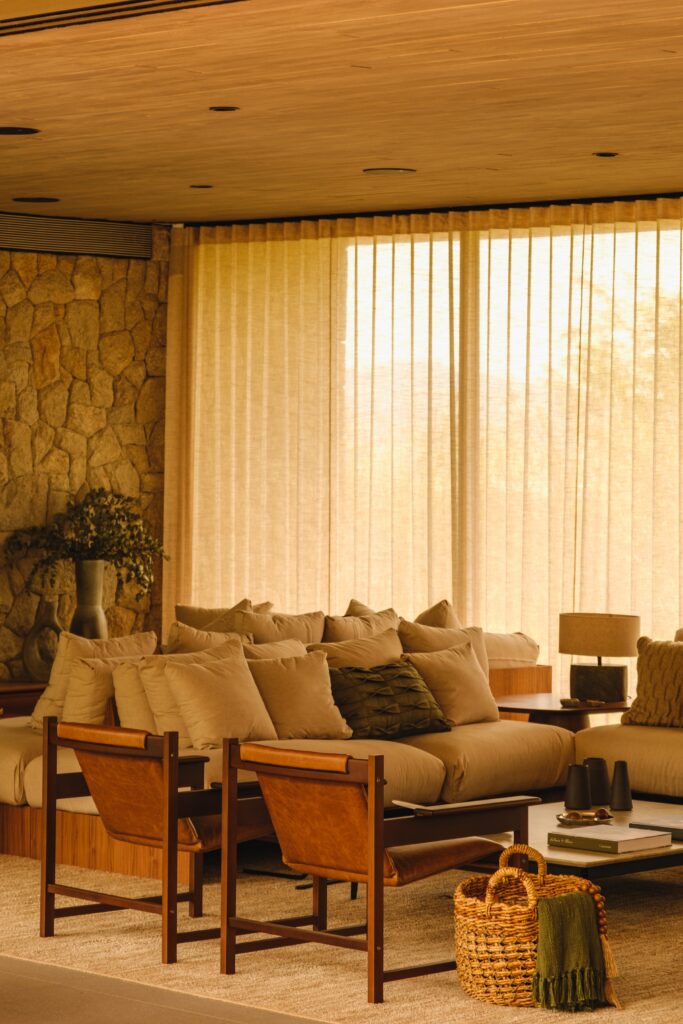
The interiors reflect the clients’ love for Brazilian modernism, expressed through mid-20th-century furniture that resonates with the exposed concrete architecture. At the same time, we introduced pieces by contemporary Brazilian designers to create a dialogue between past and present, much like the house itself, which is contemporary in form yet rooted in modernist ideals.
3. What design choices or innovations in Walkway House are you most proud of, and what challenges did you face while bringing them to life?
Architecturally, we’re particularly proud of how the design integrates seamlessly with the challenging terrain. By taking advantage of the elevation difference from the street, we created an entrance that unfolds gradually, allowing visitors to discover the house step by step. This, combined with the way the house engages with the forest, the abundant use of glass, and the contrast between shaded and sunlit spaces, makes the project especially rich. The elevated private volume that seems to float above the rest of the house is another highlight.
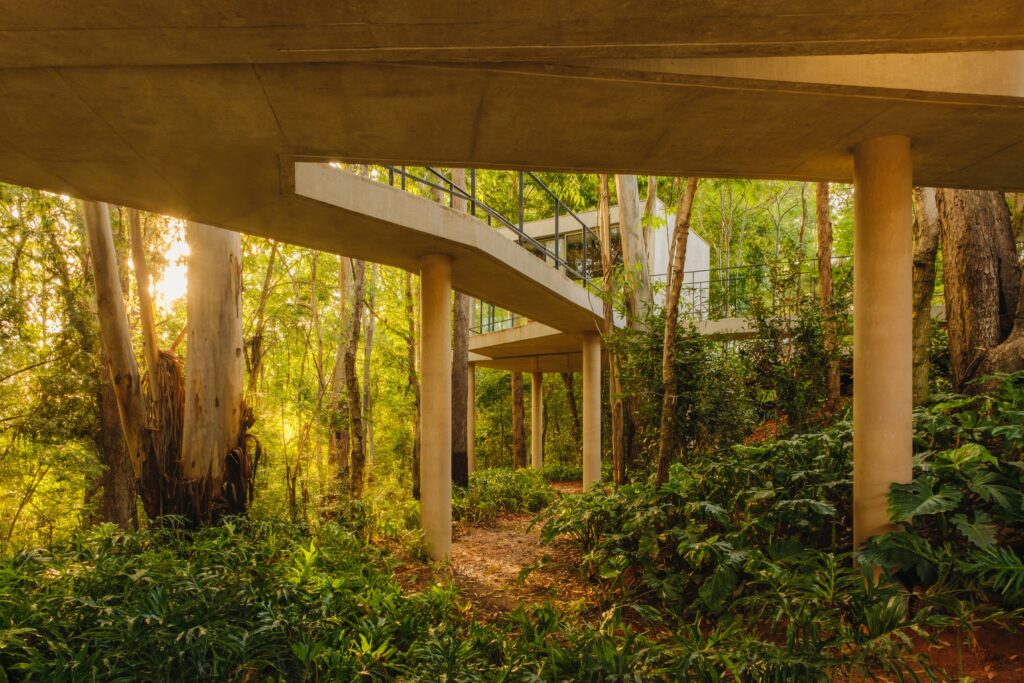
Structurally, the project demanded bold solutions, notably the slender 14.5-meter-long bridge that gives the house its name, among other technical challenges needed to make it a reality.
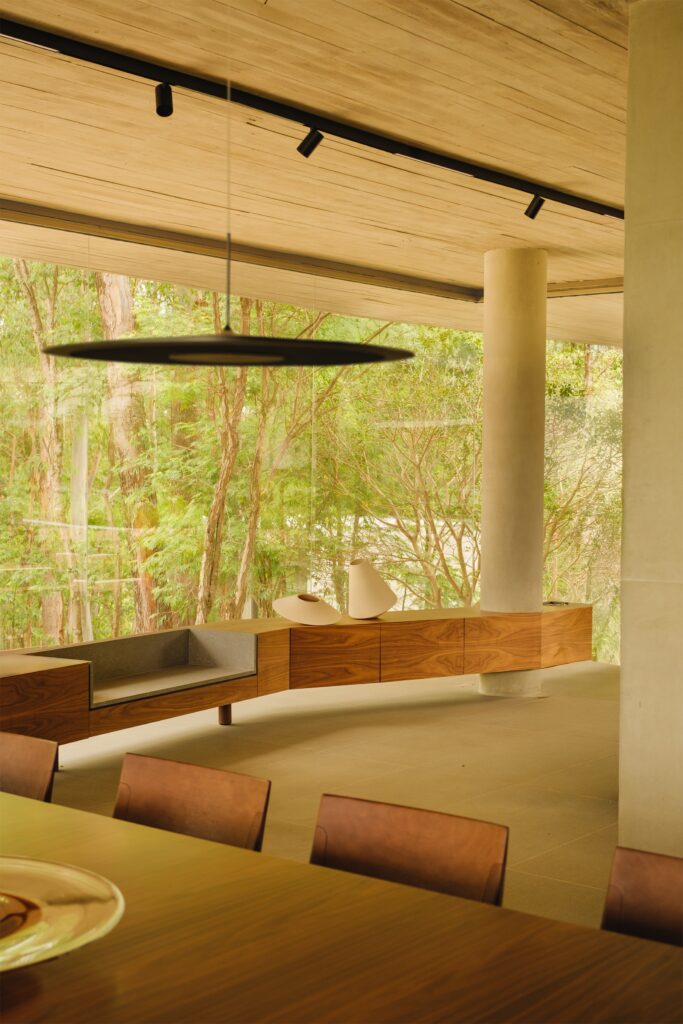
From an interior design perspective, we always strive to create pieces that are unique to each project. In Walkway House, our favorite is the long sideboard that welcomes visitors, transforming into a bench and later into a dining room console, supported by a single column and framing the view of the surrounding trees. It is a piece that truly encapsulates the spirit of the house.
4. Who are the interior designers or creative figures who inspire you most, and why?
Rather than listing interior designers specifically, we’d mention creative minds such as Alejandro Jodorowsky, Renzo Piano, Fellini, Scorsese, and Carlos Cruz-Diez. They constantly reinvent themselves, are unafraid to experiment, and fully immerse in each work they create.
5. How would you describe your design philosophy and the principles that guide your decisions?
We believe that architecture and interior design, especially in residential projects, are inseparable. Whenever possible, they should be conceived by the same team, ensuring that every detail reinforces the overall design concept. This creates not just a house to inhabit, but a complete living experience.
6. How do you balance timeless design with contemporary trends, and how do you approach sustainability in your work?
Avoiding fleeting trends is always a challenge. We focus on using natural materials that align with our architecture and collaborating with designers whose work carries authenticity and purpose. Our goal is always to create spaces that age gracefully and remain meaningful over time.
7. How do you balance your client’s needs with your own creative voice?
Every project begins with a deep understanding of our clients’ needs, both practical and conceptual, combined with factors such as regulations, budget, site, topography, and sunlight. From there, we develop an architectural and interior design concept.
Over the years, we’ve learned that the first presentation is key. When we clearly communicate the concepts and reasoning behind every decision, showing how they respond to the client’s dreams and requirements, the design is usually well-received and embraced.
It’s always an honor to be recognized by the INT. Beyond pride, we see the award as a compass, a sign that we’re on a meaningful and forward-thinking path, and that this is being acknowledged by our peers.
We’re particularly proud of this award, as Overall Winner in the category, because Walkway House has been a long-term project full of stories and dedication. Receiving this recognition feels like a kind of happy ending for everyone involved, including our clients.
9. What advice would you give to emerging designers, or what excites you most about the future of interior design?
Our advice to emerging designers would be to always design with all variables in mind. Whether it’s a chair, an interior, or a building, start by thinking and even writing down every factor that shapes the problem. Then, let it rest for a few days and allow the ideas to mature while you focus on other things. When you return, you’ll have greater clarity and a more intuitive understanding of the project, leading to more thoughtful and meaningful design decisions.
A House That Tells a Story
FGMF’s Walkway House is not simply designed, it is experienced. Moving through it means transitioning between light and shadow, openness and enclosure, architecture and nature.
In Forte’s words, it is a project “full of stories and dedication” – a home that ultimately becomes more than the sum of its parts: a dialogue between landscape, structure, and life itself.
Check out other inspiring projects:
INT Interior Design Awards Winners
Interviews:
Past INT Winners
FGMF
Official Website